

Week 03:

PROPS
Over reading week I started sculpting some of the props required for my scene. These were a:
"Whatnot"- a 19th century one to be precise (a 3 tiered open piece of furniture used to display a selection of objects) (or whatnots and thingy mi bobs)
Aforementioned display items - 3 vases/ decorative bowls the middle of which being a Ironstone Mason Vase.
A selection of Modular lamps - These all share a texture set saving both time and increasing performance should this be an actual game. For example the lights fittings are only being textured a single time and used on all 3 styles. The most interesting lamp of which is the floor standing variant, based on 19th century "Bridge Arm Lamps" With the central decoration being a reused section of a hero asset I will discuss later.
These have all been unwrapped and are awaiting texturing. (Will begin this process once the main tiling and trim materials have been implemented to my scene)
Hero/ Sidekick Assets


Another asset I spent a decent portion of time on was a "Antique Western Electric Model 302 Rotary Dial Telephone c.1930" this will be sitting on the main desk for this reason I've decided to treat a couple of items as more "Sidekick Assets" since they will be a focal point of the scene and any close up shots. With the main Hero still being the iconic book from the show these provide the chance to create more complex shapes displaying a different skillset.
There is however a glaring shader issue with the lower ring on the main dial which Arnold seemed to render where it was not otherwise present on the model?
Another couple of items that will fall under this category are as follows:

The first is an old pair of "1930's Ladies Opera Binoculars" these are something I actually own and used to use as a child (At the peak of my Spiderwick book series enjoyment) and being period appropriate I decided to include them in the scene as a little homage to those days. Plus creating something I physically own may present an interesting learning opportunity and exercise in observation.
The second is a simple key from the movie, this opens up a chest where the book is found, so as a small bit of story telling I wanted to place this alongside it on the desk as some more set dressing.

These assets are not finished but desperately needed a break from Maya's painfully grey interface and Substance Painter provided the perfect opportunity for that. Additionally planning what my secondary detailed/ minor hero assets can inform later decisions on Texel density etc
IT WOOD CAUSE ME TROUBLE
My main task for reading week was to create a wood texture that could tile on the floor for the planks. Now this I could not seem to get right...
Initially I headed to Substance Designer this was successful to begin with and I was creating something I was overall fairly content with, however as the process continued with an ever growing graph I ultimately scrapped that plan and approached it differently, the wood noise I created was okay but finer details and colour was not where I wanted it to be being too stylised.
Next was an attempted lazy route, seeing what Substance Sampler was capable of, however this also didn't achieve an interesting result, especially since this texture would be used a LOT in the scene it had to be interesting and not a generic noisy filler that sampler can be effective for. This too was scrapped...
(Left Substance Sampler, Right Substance Designer)

Finally I headed to painter, my tried and tested saint. This is where I managed to create a texture I was happy with. Even bringing in that wood grain noise that I made from Designer as a colour variation mask. Heavily utilising ID masks, fill layers with black masks and grunge maps. This creates a more visually engaging floor (even complete with nails baked into the normal map, inspired by my initial plans for Designer)
Painters ability to utilise layer structures in a downward fashion works best in my head and aligns with my mental workflows for this scenario. In the end I will approach another element in my scene with Designer and will continue learning the program (eventually I will understand Node based workflows)


Whilst the tiling still needs some work the overall wood texture was my main focus which I can now create a Smart Material and eventual variations inevitably using it on a baked trim sheet to texture the other wood elements in my scene. Which can be seen Top Left.
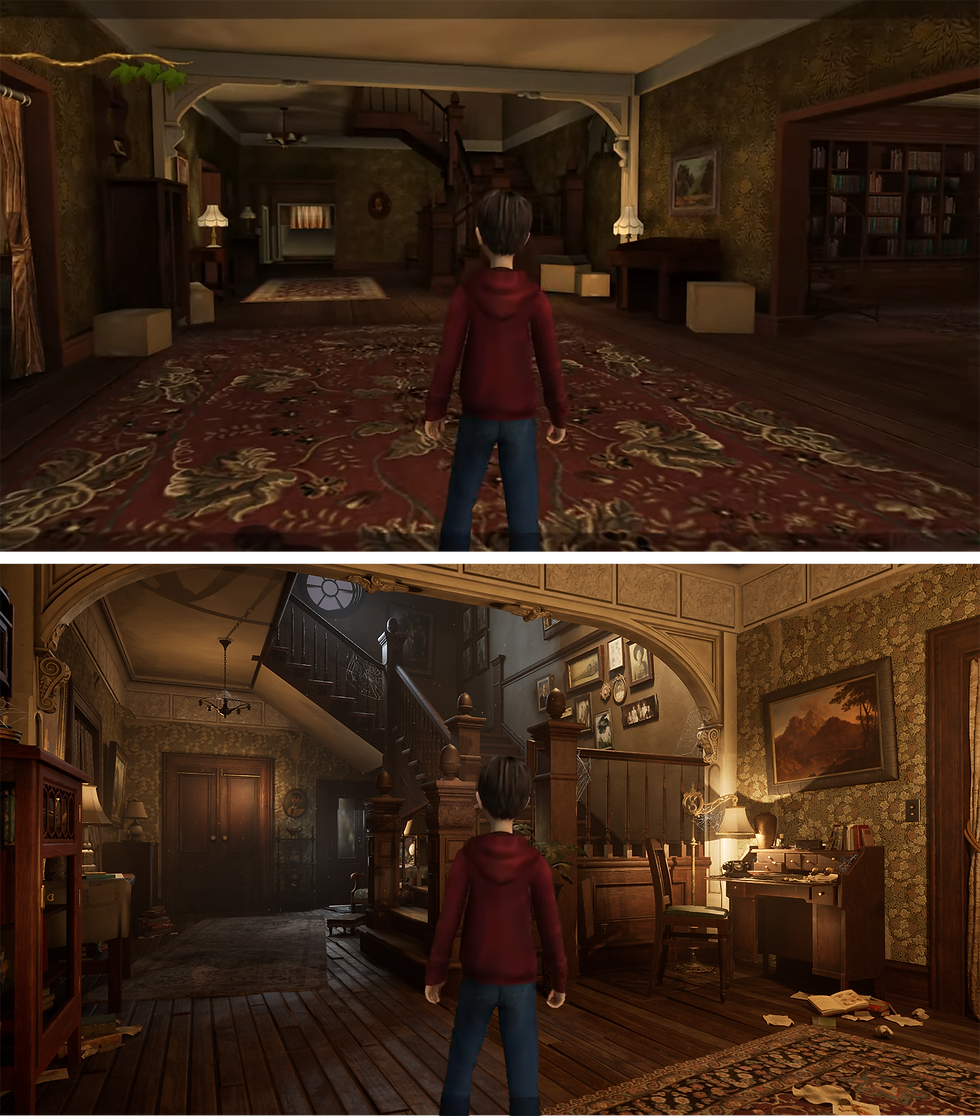
This has been applied to all of my main elements within the scene:


Comments